

News
Bangladesh Accord update shows major handover challenges
DHAKA – Just 100 out of 1688 ready-made garment factories covered by the Bangladesh Accord have so far been handed





DHAKA – Just 100 out of 1688 ready-made garment factories covered by the Bangladesh Accord have so far been handed

STOCKHOLM – Swedish retailer H&M is to phase out the use of conventional cashmere in its collections due to environmental

AMSTERDAM – Ten new innovators have been selected to join the Fashion for Good-Plug and Play Accelerator. The entrepreneurs compose

LONDON – If we can use product labelling to show consumers exactly where our food comes from, why can’t we

HERZOGENAURACH – Supply chain shortages will hamper growth at German sports giant Adidas during 2019. The company said demand has

LA CORUNA – The world’s largest clothing retailer, Spanish-based Inditex, missed full-year earnings expectations this week as it posted its

BRUSSELS – Bold new EU-backed plans have been announced to develop a stringent traceability tool for fashion brands and retailers.

GENEVA – The International Labour Organisation (ILO) and International Finance Corporation (IFC) are rolling out an innovative training scheme to

LAREN – Dutch denim business Mud Jeans says it is confident it will soon be able to offer customers jeans




ARTEIXO – Sales jumped by ten per cent at the world’s largest fashion retailer, Inditex, in the first nine months of 2017, to €17.96bn. The
STOCKHOLM – H&M has taken a significant step towards increasing its share of the burgeoning Chinese apparel market by expanding its collaboration with Alibaba. H&M
WASHINGTON – US polyester manufacturers have applauded a decision by the US Department of Commerce to apply tariffs to fine denier polyester staple fibre (fine
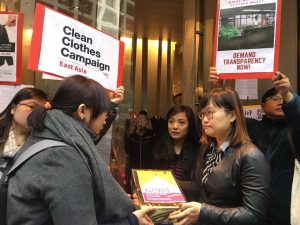
AMSTERDAM – A campaign led by Human Rights Watch, Clean Clothes Campaign, and International Labor Rights Forum is calling on Armani, Primark, Urban Outfitters, Forever
NEW YORK – Six leading apparel brands, Target, Esprit, New Balance, Puma, Gap Inc and Inditex, have shared their supplier lists with two NGOs, the US-based

We’re all ethical shoppers right? Well not quite. New research shows 78 per cent of us base our purchasing decisions mainly on price. The EY
