

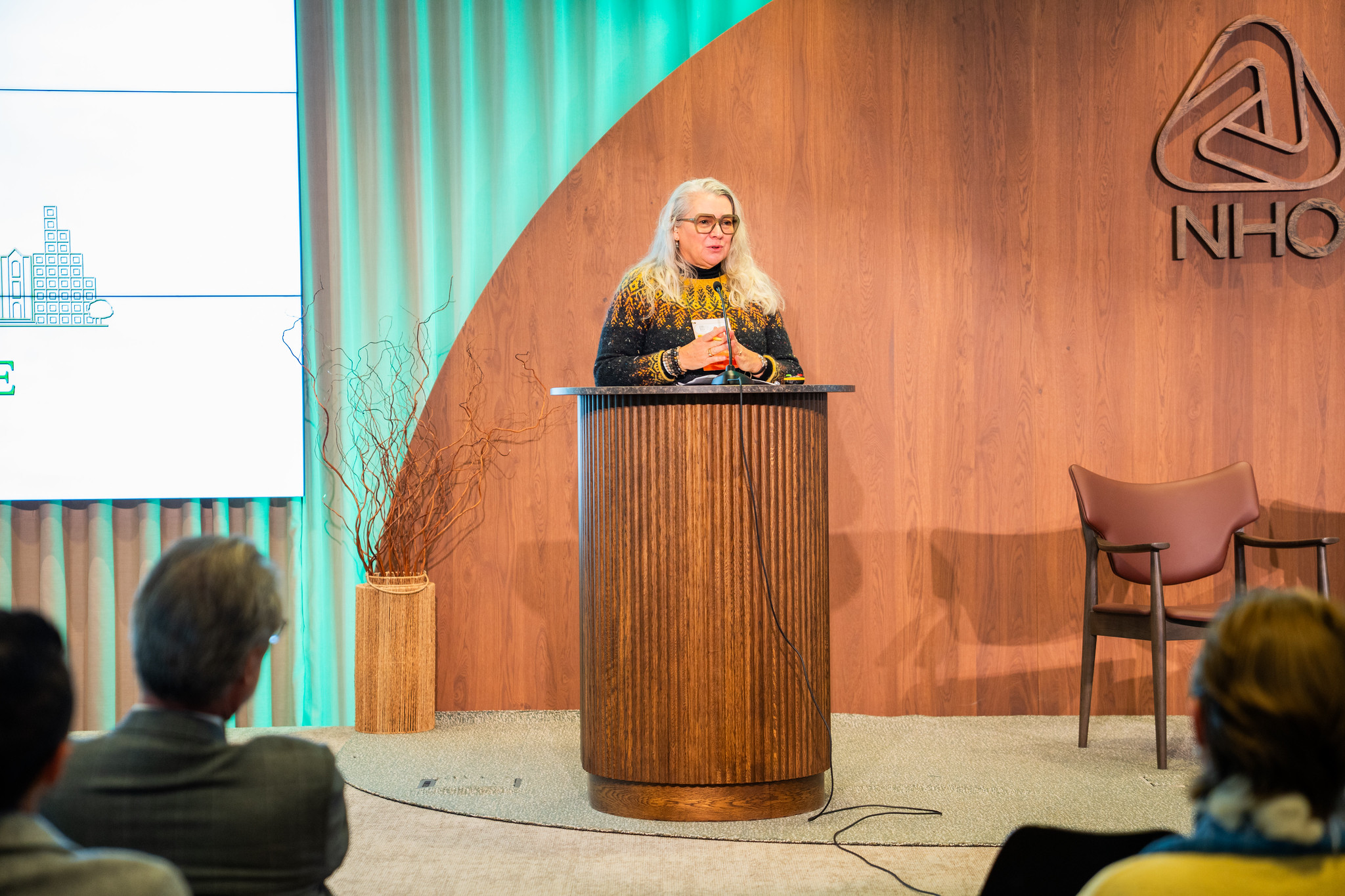
OSLO – Falling wool supplies and the way the fibre’s environmental impact is measured were key themes at the International Wool Textile Organisation’s (IWTO) Wool Round Table. The meeting, in Oslo, brought together delegates from 18 countries as Norwegian manufacturers warned they could no longer source enough domestic white wool to meet their needs.
At the first IWTO round table held in Norway, delegates discussed how to make wool growing commercially viable and how to document the fibre’s environmental performance. The meeting ran alongside Ulldagen, Norway’s annual Wool Day, hosted by Norsk Industri and Norilia.
IWTO technical adviser Dr Paul Swan presented early findings from the organisation’s research into biogenic carbon, while Elisabeth van Delden of the Make the Label Count campaign argued that current EU footprinting methods disadvantage natural fibres.
Ida Oppen, chief adviser for sustainability and quality at Norsk Industri, said Norwegian research was filling gaps in the evidence on sheep farming, but the results depended heavily on the method used.
Oppen urged delegates to consider durability, performance, chemical content and responsible production alongside carbon footprint figures, and said each needed robust documentation.
The supply discussion then turned on whether growers can earn enough from wool to rebuild flocks. Don Macdonald, a woolbroker and grower who sits on the board of Australian Wool Innovation, said tested Australian wool volumes had fallen by a quarter since 2009/10. Over the same period, the cost of shearing and baling wool had risen by more than 80 per cent. He said rebuilding flocks takes time and depends on sustained demand and better returns for growers.
In Norway, classified wool volumes have fallen 38 per cent since 2007, from 4,650 tonnes to 2,898 tonnes.
Erling Digernes, president of Norsk Industri’s textile association, said the market pays around NOK 4 per kg for C1 wool and that the state subsidy had fallen 65 per cent in real terms since 1998. He proposed indexing wool payments to inflation, prioritising the grades manufacturers need and roughly doubling payments for first-grade wool.
Manufacturers also set out what they need from the supply chain. Thomas Frodahl, marketing director at Røros Tweed, called for stable supplies of usable grades and digital traceability from farms through to product passports. Knitwear maker Norlender uses around 21 tonnes of wool a year, 60 per cent of it Norwegian. Stephanie K. Tveiten, whose family runs the company, said the availability of local wool was central to keeping its factory in Norway.
“Wool gave us a second chance. Now Norwegian wool needs one too,” she said.
