
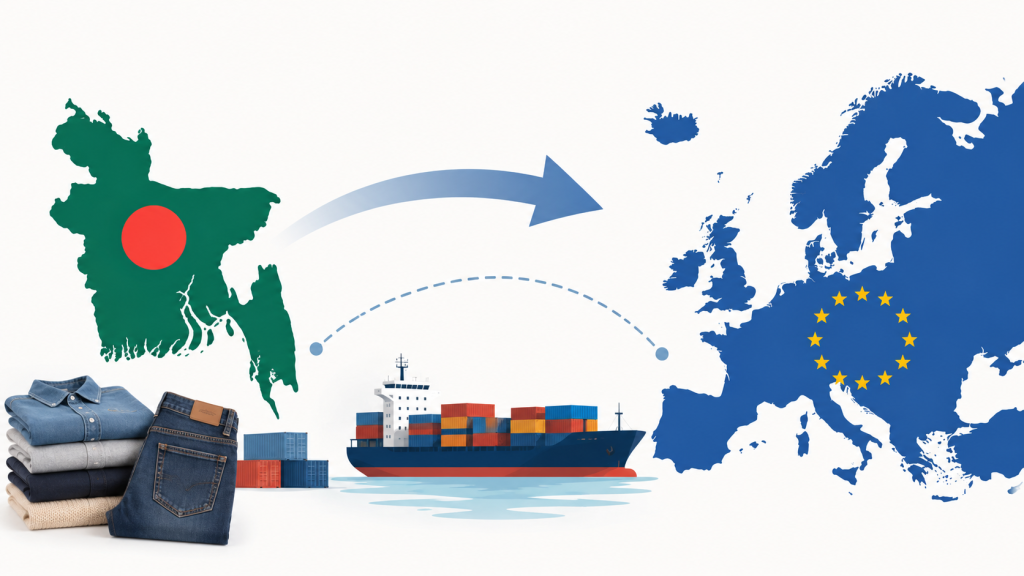
DHAKA – Bangladesh is urging a clearer trade settlement with the EU before the country graduates from LDC status in November. Without a workable post-graduation deal, garment exporters fear losing the duty-free access that helped build one of the world’s largest apparel industries.
That concern dominated the 20th Bangladesh Denim Expo in Dhaka, organised by Bangladesh Apparel Exchange under the theme “Frontline to Future.”
The event drew more than 50 exhibitors from over 10 countries across denim fabrics, finishes and innovation.
The loudest message was about market access and the future of Dhaka’s relationship with Brussels.
Michael Miller, EU Ambassador to Bangladesh, said the bloc sees the country entering “a new phase of its economic journey,” with the challenge now being to create decent jobs, build skills, attract higher-quality investment and move up the value chain.
He also passed on an invitation from Commission President Ursula von der Leyen for Bangladesh’s Prime Minister to attend the next Global Gateway Summit in Brussels, and the EU is assessing Dhaka’s request for a free trade agreement.
Bangladesh’s apparel position rests largely on preferential access under the EU’s Everything But Arms scheme, which lets LDC exports enter duty-free and quota-free.
Once that status changes, so does the access.”The preferences we currently enjoy will change after graduation. If we are not prepared, the industry will feel it,” said Mahmud Hasan Khan Babu, president of the Bangladesh Garment Manufacturers and Exporters Association (BGMEA), noting that Bangladesh is now the largest denim exporter to both the EU and the US, ahead of China.
Without the right arrangements, he warned, ready-made garments could shift from being the biggest beneficiary of preferential access to “the biggest loser.”
Bangladesh is expected to keep existing EU preferences through a transition period, but the longer-term path is unresolved. GSP+ is one option, though it carries stricter conditions; a free trade agreement would be more ambitious but harder to negotiate.
The outcome will potentially shape European sourcing decisions, as brands make increasing demands on suppliers in areas such as cleaner production and use of renewable energy.
Babu argued the industry cannot manage this alone, calling on brands to partner with manufacturers “not just audit us,” and on development partners and government to invest and stand alongside the sector rather than simply advise and regulate it.
That theme ran through the expo’s panels on post-LDC trade, just transition, product diversification and green investment, where EU officials appeared alongside Bangladesh Bank, the ILO, GIZ and Better Work Bangladesh.
Mostafiz Uddin, founder and CEO of Bangladesh Denim Expo, said: “Bangladesh is not waiting for the future, it is building it.”
He pointed to green investment, post-LDC trade strategy and diversification beyond apparel.