



LONDON – 2025 was the year in which we saw the first signs of fashion scaling back its relentless sustainability narrative. Some call it ‘greenhushing’ but the more inconvenient truth is that brands have realised they can no longer push out any old nonsense and label it ‘sustainable’. Regulators are on their case, so smart brands are being more careful and precise with their language around this issue. Surely that’s to be welcomed.
The other big issues in 2025 were Trump’s tariffs, which are threatening to rewire fashion supply chains; ultra-fast fashion platforms which continue to make headlines for the wrong reasons; stop-start efforts at regulatory reform (particularly in the EU); and the continued trials and tribulations of novel next-gen fibres.
Here we look at six key issues which caught our eye in 2025
Regulatory whiplash
In 2025, fashion and textiles sat inside a tightening regulatory net. Yet parts of that same net were also being cut back in the name of “competitiveness.” In the EU, the Corporate Sustainability Reporting Directive and Corporate Sustainability Due Diligence Directive became political flashpoints, culminating in late year votes around an ‘Omnibus’ simplification that materially reduced the scope and timelines of the legislation. Will it have any meaningful impact in its watered own form?

At the same time, regulators signalled that consumer facing claims would be policed more aggressively. In the UK, the Advertising Standards Authority used its AI driven Active Ad Monitoring tool to identify fashion ads for investigation and ruled that unqualified “sustainable” wording in paid search advertising was misleading.
We expect more use of AI by other resource-strapped watchdogs. Policing the proliferation of green claims has always been a huge challenge but used smartly, AI could be a game changer for regulators keen to tackle greenwashing.
Extended Producer Responsibility (EPR) goes mainstream
Textile waste policy hardened in 2025, especially in Europe, with EPR shifting from a patchwork of national schemes to an EU-wide policy. The targeted revision of the EU Waste Framework Directive entered into force in October and introduced common rules for mandatory textile EPR across Member States, with clear implementation deadlines.
The European Commission suggests there were around 12.6 million tonnes of textile waste generated in the EU in 2019 (a figure that will now be considerably more), with only around one fifth separately collected for reuse or recycling.
For brands and retailers, this shifting regulatory landscape is turning ‘circularity’ from a voluntary programme into a cost and data problem. Fees, reporting rules, and “eco modulation” look set to reward (or penalise) poor logistics management.
Much, however, will depend on how EPR is implemented and the levies involved. This issue is far from straightforward, as the experiences of France have illustrated.
Ultra-fast fashion faced new friction
In the second half of 2025, Europe’s response to the flood of low value e-commerce parcels started to crystallise into concrete measures. EU Member States agreed that, from 1 July 2026, parcels under €150 entering the bloc will face a fixed €3 customs duty, a policy explicitly aimed at the dominance of low value imports, widely associated with China based platforms.
Alongside trade mechanisms came enforcement on commercial practice. France fined Shein €40m for deceptive discounting practices, with investigators finding that many “deals” did not reflect genuine price reductions under French rules (quelle surprise!).

Italy also fined Shein €1m (£870,000) for making misleading environmental claims about its products
European countries have been like a rabbit in the headlights these past few years as the likes of Shein and Temu have completely altered their retailing landscape by massively undercutting domestic producers.
Finally in 2025 the penny seems to have dropped as the EU and its member states seek to implement measures that ensure all companies supplying into these markets (Chinese or otherwise) are operating on the same level playing field.
Recycled polyester questions that won’t go away
A major narrative shift in 2025 was the growing scrutiny of recycled synthetics, especially recycled polyester, as evidence mounted that “lower carbon” does not automatically mean “lower impact.” Changing Markets Foundation published laboratory results indicating that recycled polyester shed around 55 per cent more microfibres during washing than virgin polyester in its tests, with averages cited at 12,430 fibres per gram for recycled versus 8,028 for virgin.
The results mirror earlier findings on this issue in the academic literature.
There is a real challenge here for brands as the issue of microplastic release from recycled polyester sits uncomfortably alongside recycled content targets. Such ‘targets’ may soon become a thing of the past, we suspect, not least because brands appear to be dialling down their sustainability rhetoric generally (and not before time).
New fibres, old problems
2025 produced plenty of pilots and partnerships, but it also become increasingly clear that scaling new fibres continues to be a huge, seemingly insurmountable bottleneck. Natural Fiber Welding announced it was winding down operations. MycoWorks said it was shutting down its one and only plant in South Carolina. Ananas Anam UK, which produced a bio-based leather called Piñatex, used by the likes of Hugo Boss, entered administration. Bolt Threads, whose leather alternatives were used by Stella McCartney, discontinued development. The Financial Times even ran an article called The Sustainable Fabric Market Collapse.

Circulose, the Swedish recycler formerly linked to Renewcell, is still hanging on by a thread (pardon the pun). The company says it is focusing on longer term brand commitments to restart sales of its recycled cellulose pulp, recently listing new partners including Bestseller, John Lewis, C&A, Filippa K, Reformation, Faherty, Bobo Choses and Zero, following earlier commitments from H&M, Mango and Marks & Spencer.
Circulose says this as a deliberate strategy to bring its material back “at scale.” But there are no precise details on commitments, and the company has been incredibly cagey with us when we’ve tried to broach this subject. The big question for Circulose is: has anything fundamentally changed since last time?
Why it’s ultimately all about the consumer
Resale markets are still presented as an easy sustainability win, but 2025 produced more evidence that consumer behaviour trumps everything. A Yale study suggested that frequent second-hand shoppers also tend to buy more new clothing. If resale does not displace new production, the sustainability argument begins to look flaky.
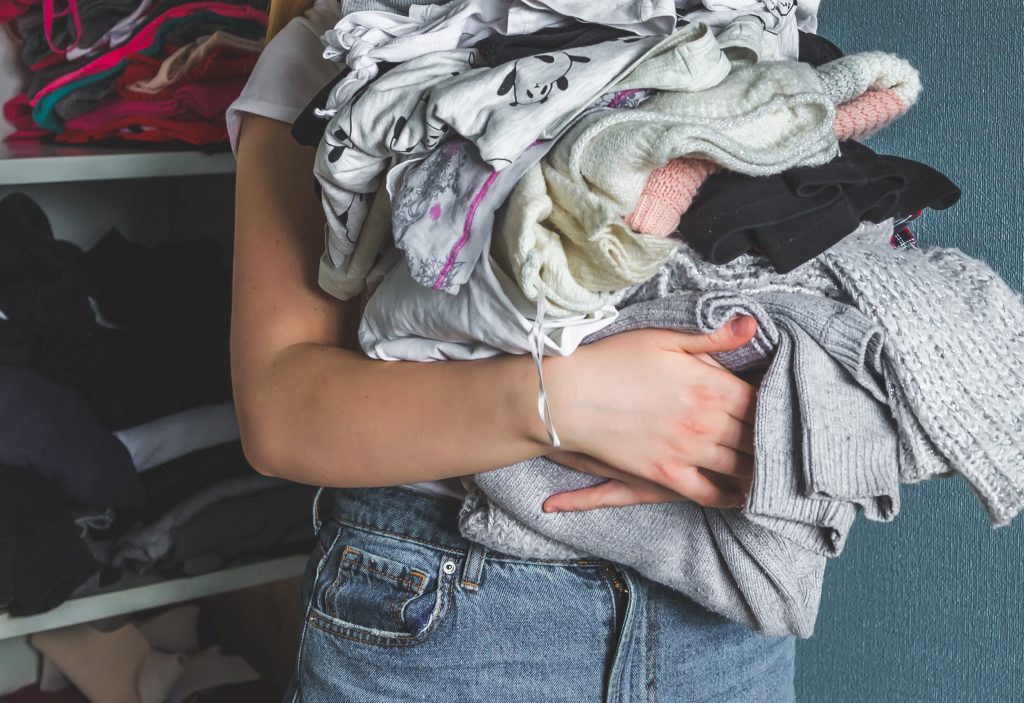
There was quite a lot of research on consumer behaviour in 2025. One of our most popular stories looked at how consumers make better decisions when they are given information on ‘cost-per-wear (CPW)’. Researchers from the University of Bath and Cambridge University found that simply showing consumers the CPW of garments (price divided by the number of times an item can be worn) can shift preferences away from cheap, low-quality clothing toward higher-priced, longer-lasting options.
Brands have spent two decades talking endlessly about sustainability. There seems to be an implicit assumption that this is what consumers want to hear. But what if consumers simply want value for money?
Now there’s a thought.