

News
ILO wants international support for Uzbekistan cotton sector
GENEVA – The International Labour Organisation has called for the international community to support Uzbekistan in its reform agenda –





GENEVA – The International Labour Organisation has called for the international community to support Uzbekistan in its reform agenda –

SOFIA – Bulgarian textile mills, unions and brands including H&M, Inditex and ASOS met recently to look at ways to

CHANGZHOU – For the first time ever, researchers from China have measured the impact that textile dyeing wastewater treatment processes

AMSTERDAM – The vast majority of consumers want more transparency from apparel brands and retailers claims new research. 80 per

MONTREAL – Canadian global apparel business, Gilden, has hit back at accusations by NGOs and unions that its suppliers violated

BRASÍLIA – Organic cotton production in Brazil has been given a boost with a new project which will support around

PLYMOUTH – Pollution from cellulose fibres such as cotton and linen made up 80 per cent of all deep-sea microfibres

LONDON – Garment worker burnout, as well as being unethical, is also bad for business. The cover story of the

LONDON – New laws and stronger enforcement are needed to better regulate exploitation in the global supply chains of UK




ARTEIXO – Sales jumped by ten per cent at the world’s largest fashion retailer, Inditex, in the first nine months of 2017, to €17.96bn. The
STOCKHOLM – H&M has taken a significant step towards increasing its share of the burgeoning Chinese apparel market by expanding its collaboration with Alibaba. H&M
WASHINGTON – US polyester manufacturers have applauded a decision by the US Department of Commerce to apply tariffs to fine denier polyester staple fibre (fine
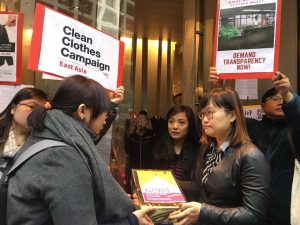
AMSTERDAM – A campaign led by Human Rights Watch, Clean Clothes Campaign, and International Labor Rights Forum is calling on Armani, Primark, Urban Outfitters, Forever
NEW YORK – Six leading apparel brands, Target, Esprit, New Balance, Puma, Gap Inc and Inditex, have shared their supplier lists with two NGOs, the US-based

We’re all ethical shoppers right? Well not quite. New research shows 78 per cent of us base our purchasing decisions mainly on price. The EY
